
- Insights
What is OpenAI Signals?

In short: OpenAI Signals is OpenAI’s public data on how people use ChatGPT. It breaks consumer ChatGPT messages down by topic, by whether they’re about work, by age and by country, month by month since July 2024. The latest version, 3.0, came out on 26 October 2026. It’s free to download and use under a CC BY 4.0 licence.
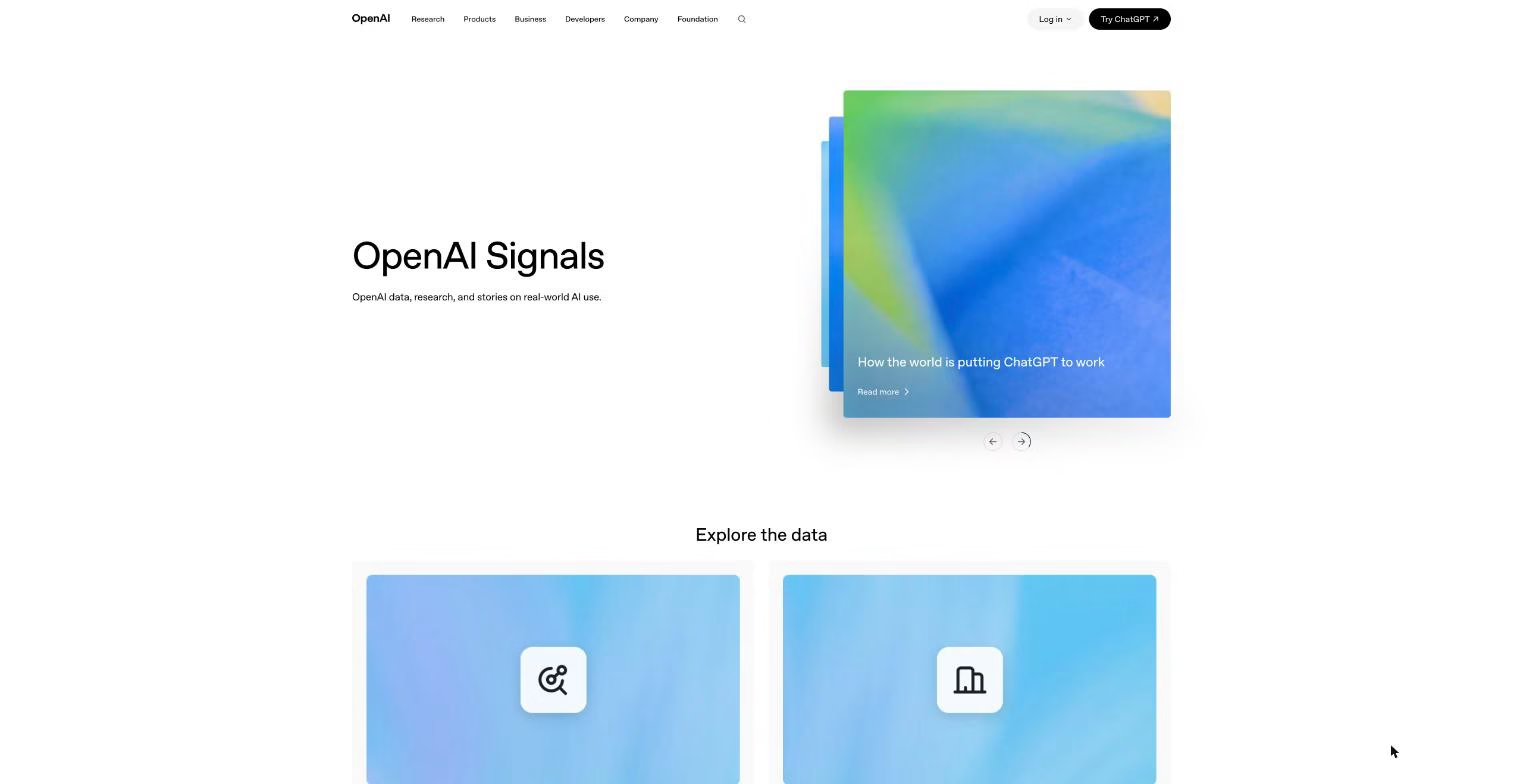
What’s in OpenAI Signals?
The data comes from a sample of a million consumer ChatGPT messages a month, from July 2024 to September 2026, sent by adults. AI classifiers sort each message into categories. OpenAI says no person reads the messages, and it adds statistical noise to the published figures to protect privacy.
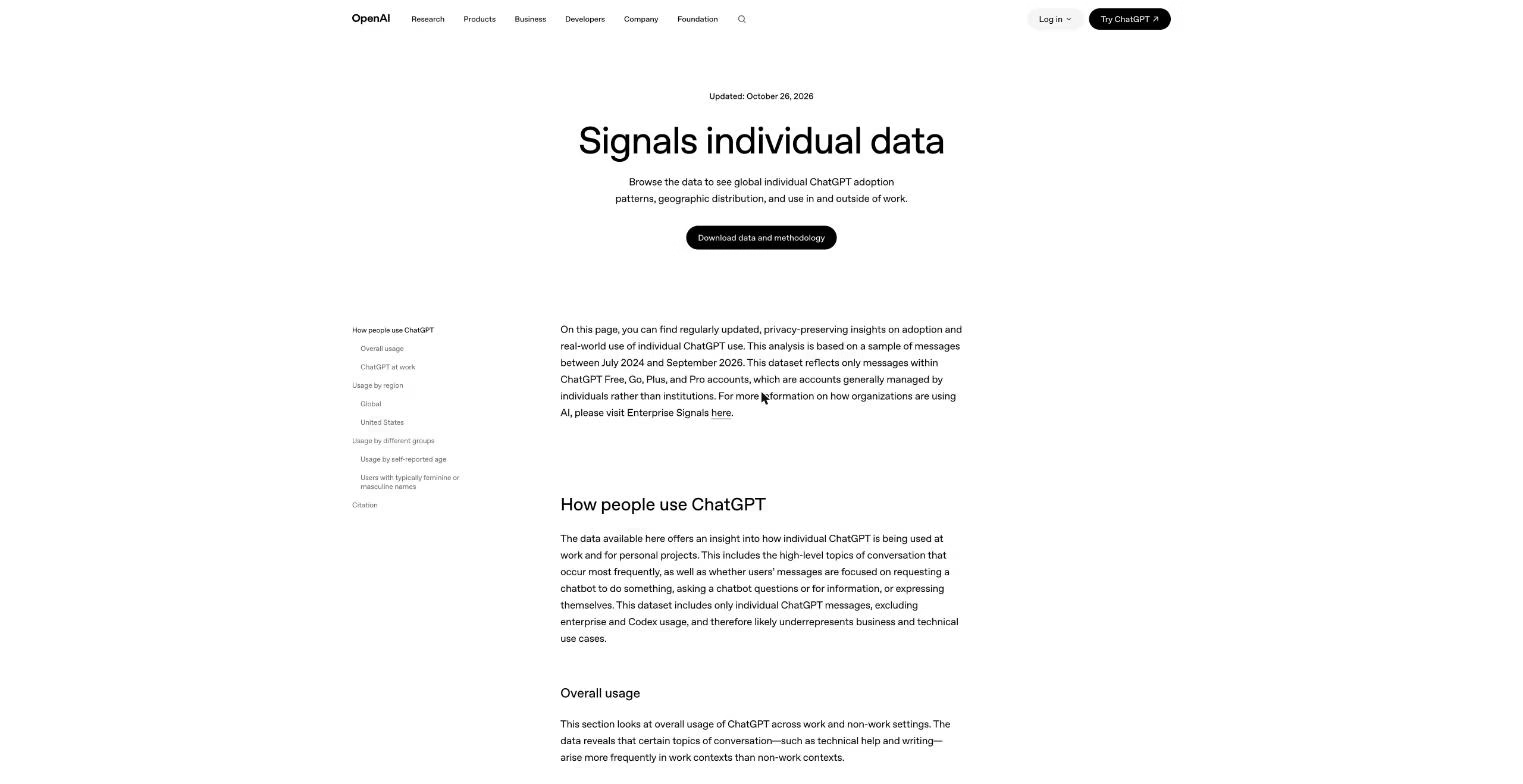
You can see:
- Topics: practical advice, looking things up, writing, technical help, images and media, self-expression
- Work or not: whether each message is about work
- Asking, doing or expressing: whether the person wants information, wants ChatGPT to make something, or neither (greetings, chit-chat, sharing news)
- Age groups and plans: Free, Go, Plus and Pro (the plan split is global only, not per country)
- Countries: topic, work and age breakdowns by country, plus a ranking of about 170 countries by how much ChatGPT is used per person
- Work tasks: which work activities people use ChatGPT for, by country and quarter
The data page lets you filter the charts by country. Here’s Finland:
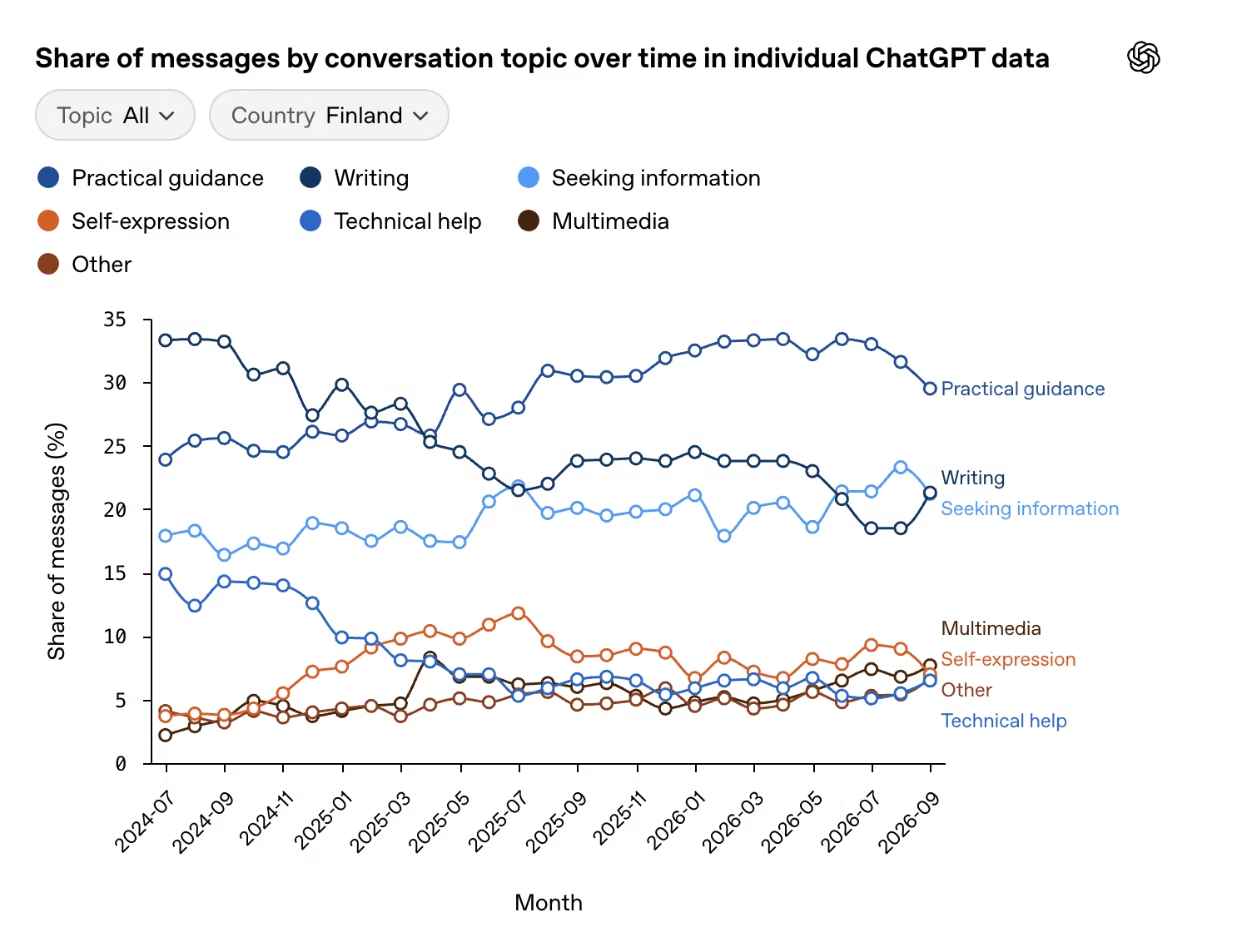
We used it to see how Finnish people use ChatGPT. The short version: advice and looking things up now make up half of Finnish messages, and writing has dropped from first place.
What OpenAI Signals can’t tell you
It shows what people ask ChatGPT. It doesn’t show:
- which websites ChatGPT cites in its answers
- whether anyone clicks through or buys
- how many messages there are in total, only shares
- business use: Enterprise plans and Codex are left out, so work use is undercounted
- how much “looking things up” is shopping, because product questions share a category with facts and recipes
For marketing, that last gap matters. To know whether your company shows up when people ask ChatGPT about your category, you have to check the answers themselves. That’s what our AI visibility audit does. Our expert verifies the findings and writes the report.
How to download OpenAI Signals data
The CSV files and a data dictionary are on OpenAI’s data download page. There are 24 CSV files. You can use them for your own analysis as long as you credit OpenAI, which suggests citing the dataset as “OpenAI Signals v3.0” (Chatterji, Cunningham, Deming et al., 2026).
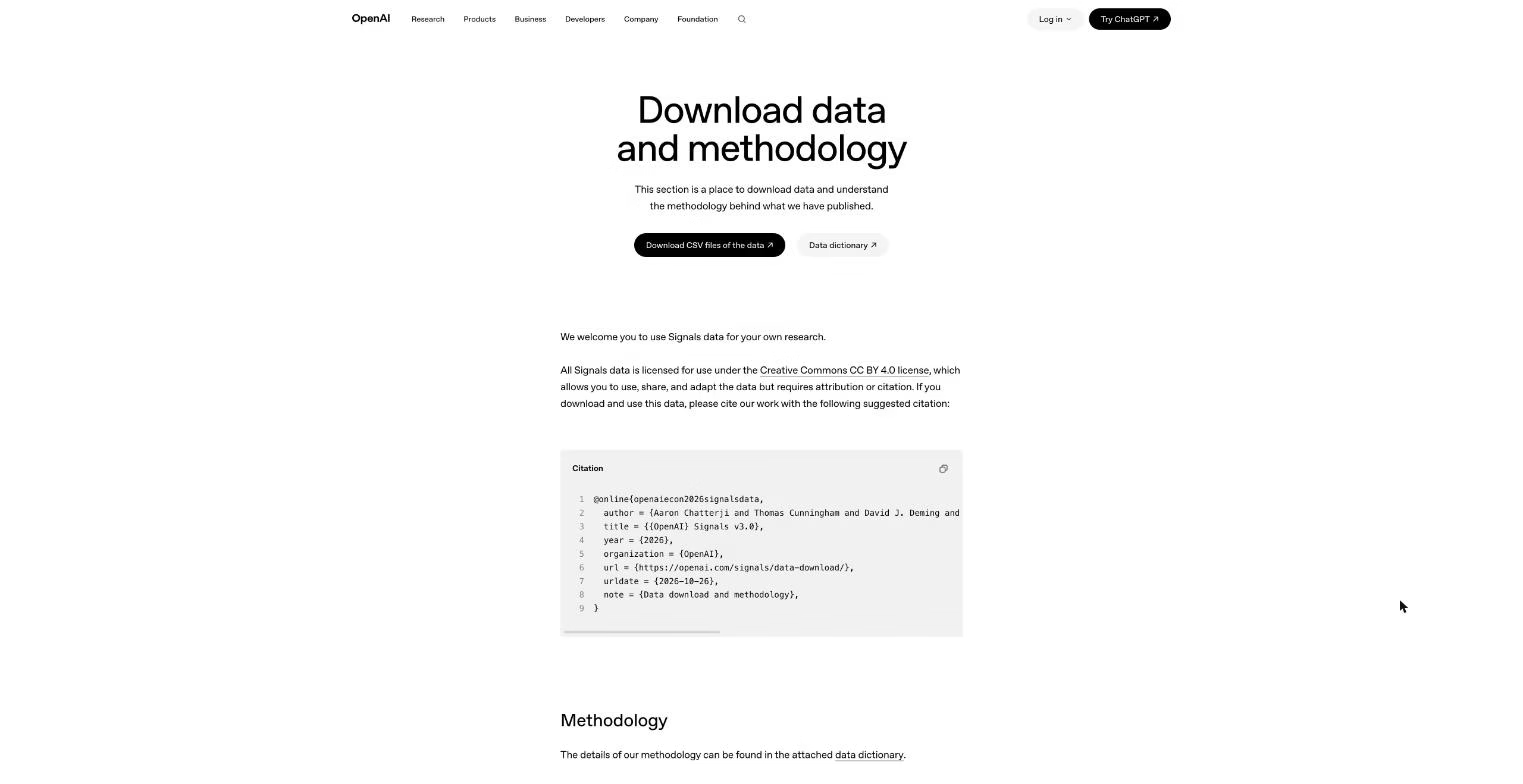
OpenAI also publishes Enterprise Signals, a separate dataset on how businesses use AI.
FAQ
OpenAI’s public dataset on how people use consumer ChatGPT, broken down by topic, work use, age, plan and country. Version 3.0 was released on 26 October 2026.
Yes. It’s published under a Creative Commons CC BY 4.0 licence, so you can use and share it as long as you credit OpenAI.
From openai.com/signals/data-download, as 24 CSV files with a data dictionary.
No. It covers the consumer plans (Free, Go, Plus and Pro). ChatGPT Enterprise and Codex are excluded, so business use is undercounted. OpenAI’s separate Enterprise Signals covers companies.
No. It only classifies what people ask. To see whether your site is cited, you need to check ChatGPT’s actual answers.
Otso Karvinen
Co-founder & Growth Strategist
I help marketing and sales teams do more in a month than their competitors do in a quarter. With 15+ years in marketing and sales, I now help build agentic AI systems that let small teams deliver faster and better results. I’m easy to work with and happy to have a no-strings conversation about where you are and how I and our team at Parvi can help.
Read more about Otso KarvinenWe’ve got a CTA for you!
Check out our pricing
Our pricing is on the site, in the open. The old agency model hides its price behind ‘let’s talk.’ We don’t need to.
Read more of
